
Aer Lingus College Football Classic: A History of TCU Football
By Simon Carroll
If you are heading to Dublin for the Aer Lingus College Football Classic, there are two things you should probably know about TCU before the Horned Frogs take the field against North Carolina.
First, they have won two recognised national championships.
Second, they are named after a small, angry-looking lizard.
That combination tells you quite a lot about Texas Christian University.
Based in Fort Worth, Texas, TCU has been playing football since 1896 and has spent more than a century establishing itself as one of the most distinctive programs in the sport. The Horned Frogs have won national championships, produced a Heisman Trophy winner, developed NFL stars and, more recently, crashed the College Football Playoff after spending years proving that a team did not necessarily need to come from one of college football’s traditional power conferences to compete with the big boys.
The early years and two national championships
TCU’s football story began when the university was still known as Add-Ran Christian University. The program eventually became a member of the old Southwest Conference, placing it alongside Texas, Texas A&M, Arkansas and other established powers in the region.
The first great TCU team arrived in the 1930s under head coach Dutch Meyer. The Horned Frogs went undefeated in 1935 and were awarded a national championship, before doing it again in 1938. Those two teams established TCU as a genuine national power, rather than simply another Texas college with a football team.
The 1938 team was led by quarterback Davey O’Brien, who won the Heisman Trophy and the Maxwell Award after throwing for 1,509 yards and 19 touchdowns. O’Brien remains the only Heisman winner in TCU history, and the award named in his honour is now presented annually to the nation’s best college quarterback.
O’Brien’s career after college was rather less conventional than most Heisman winners. He played two seasons in the NFL before joining the FBI, eventually spending a decade as an agent. So if you are ever asked to name a Heisman winner who became an FBI agent, you now have your answer.
TCU’s other great star from the era was Sammy Baugh, who went on to become one of the earliest superstar quarterbacks in NFL history. Between Baugh, O’Brien and the national championships, TCU had already established a pretty impressive football résumé before the Second World War.
The decades that followed were rather less glamorous.
From powerhouse to outsider
TCU remained a respected program, but the Horned Frogs went through a long period in which national prominence became increasingly difficult to find. The Southwest Conference eventually disappeared, and TCU spent time in the WAC and Conference USA before joining the Mountain West.
That unusual conference journey is important to understanding the modern history of the program. TCU was winning, but it was doing so outside the traditional power structure of college football.
Then came LaDainian Tomlinson.
The future NFL Hall of Famer arrived in Fort Worth in 1997 and quickly became one of the most spectacular running backs in college football. In 1999, he led the nation with 1,850 rushing yards. In 2000, he somehow got even better, rushing for 2,158 yards and 22 touchdowns and becoming only the eighth player in NCAA history to break the 2,000-yard barrier.
Tomlinson finished fourth in the Heisman Trophy voting that year and won the Doak Walker Award as the nation’s outstanding running back. He left TCU with 5,263 career rushing yards, having led the nation in rushing in consecutive seasons.
For anyone who knows Tomlinson from his NFL career with the San Diego Chargers, it is worth remembering just how ridiculous he was before he got there. TCU’s 2000 season was its first ten-win campaign, and Tomlinson was a huge reason why the Horned Frogs were suddenly impossible to ignore.
There was another important figure arriving in Fort Worth around the same time: Gary Patterson.
The Gary Patterson Revolution
Gary Patterson at TCU
— College Football Report (@CFBReport) July 13, 2023
2000: 0-1
2001: 6-6
2002: 10-2
• CUSA Champs (1/2)
2003: 11-2
2004: 5-6
2005: 11-1
• MWC Champs
2006: 11-2
2007: 8-5
2008: 11-2
• #7 Final AP Poll
2009: 12-1
• MWC Champs
• #6 Final AP Poll
2010: 13-0
• MWC Champs
• Rose Bowl Champs
• #2 In Final… pic.twitter.com/OTb18N1oO3
Patterson became TCU’s head coach in 2000 after previously serving as the team’s defensive coordinator. His tenure would ultimately last more than two decades and completely change the perception of the program.
Patterson’s TCU teams were built around defense, discipline and a rather unpleasant experience for opposing quarterbacks. The Horned Frogs developed a reputation for being aggressive, physical and exceptionally well coached, even when they were playing in conferences that did not carry the prestige of the Big Ten or SEC.
That philosophy eventually produced one of the great underdog stories of the BCS era.
TCU went undefeated in 2009, finishing 12-0 and earning a place in the Fiesta Bowl. The following season, the Horned Frogs did it again. Led by quarterback Andy Dalton, TCU went 13-0 and earned an invitation to the Rose Bowl.
Dalton is another name that should be immediately familiar to NFL fans. He became the winningest quarterback in TCU history, won three bowl MVP awards and led the Horned Frogs into the biggest game in their history.
Andy Dalton and the Rose Bowl
On New Year’s Day 2011, TCU faced Wisconsin in the Rose Bowl.
Wisconsin was a traditional Big Ten powerhouse. TCU was the unbeaten outsider from the Mountain West.
The Horned Frogs won 21-19.
Dalton threw for 219 yards and a touchdown and also ran for another score, while the TCU defense produced one of the defining moments of the game when Tank Carder broke up a two-point conversion attempt with just over two minutes remaining.
TCU finished the season 13-0 and ranked No. 2 in the country.
They had not won the national championship — Auburn ultimately did — but they had done something almost as important for the program’s identity. They had demonstrated on one of college football’s biggest stages that the supposedly lesser teams could beat the established powers.
The Rose Bowl victory became shorthand for the entire TCU philosophy: give the Horned Frogs an opportunity and they might make you regret it.
A Seat at the Big 12 Table
In 2014, #6 TCU destroyed #9 Ole Miss 42-3 in the Peach Bowl 🏈🐸
— CFB Kings (@CFBKings) February 25, 2025
I will stand by my belief that 2014 TCU is the biggest CFP snub ever and could have won the national title that season. The Big 12 hurt themselves badly by not having a conference title game.
The Horned Frogs… pic.twitter.com/RVvqNw4uFg
TCU joined the Big 12 in 2012, finally moving into one of college football’s traditional power conferences.
It was an important moment. For years, TCU had been arguing that it belonged among the country’s elite. Now it had a seat at the table.
There were ups and downs, including a difficult first season in the conference, but TCU eventually produced another remarkable run.
In 2014, the Horned Frogs went 12-1 and were ranked No. 3 in the final College Football Playoff rankings. They had beaten Iowa State 55-3 in their final game of the regular season and looked like a genuine national championship contender, only to be left out of the inaugural playoff.
The decision remains one of the most controversial selection debates in the history of the sport.
TCU responded by destroying Ole Miss 42-3 in the Peach Bowl.
If nothing else, the Horned Frogs had made their feelings known.
The 2022 Fairytale
In the 2022 college football playoffs TCU’s Quentin Johnson took a shallow crossing route 76 yards to the house in the 4th quarter to help TCU upset Michigan!
— College Football Zone (@CollegeFBonX) June 14, 2026
College football is back in 76 days! pic.twitter.com/VSA22BBzTk
The most extraordinary chapter came eight years later.
TCU went 13-0 during the 2022 regular season, survived a series of close games and reached the College Football Playoff.
In the Fiesta Bowl, the Horned Frogs faced Michigan and produced one of the wildest playoff games ever played. TCU jumped out to a huge lead, survived a Michigan comeback and eventually won 51-45.
That sent the Horned Frogs to the national championship game against Georgia.
Unfortunately for TCU, the storybook ending did not arrive.
Georgia won 65-7.
It was an astonishingly brutal conclusion to an otherwise extraordinary season, but by then TCU had already accomplished something remarkable. A program that had spent decades outside college football’s traditional inner circle had reached the national championship game.
Why the Horned Frogs?
The name comes from the Texas horned frog, a small reptile native to the region. The creatures are famous for their spiky appearance and defensive abilities, including the rather unpleasant habit of squirting blood from their eyes when threatened.
It is difficult to imagine a better mascot for a football program built around defense.
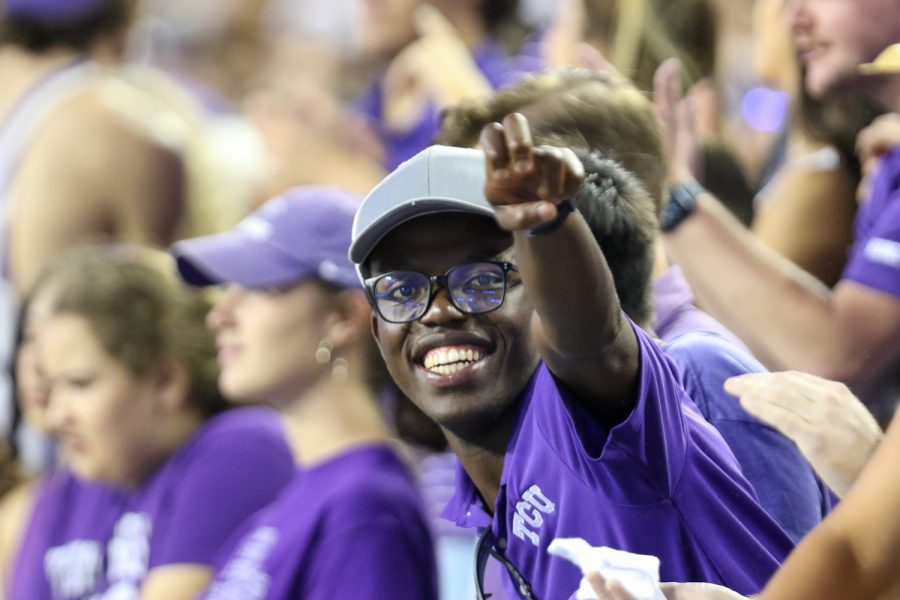
The Horned Frogs have also developed one of the most recognisable traditions in college football. Fans make the “Frog hand” gesture with their fingers, while purple dominates everything from the uniforms to the stands to the mascot himself.
There is also the question of what exactly TCU stands for. The initials originally represented Texas Christian University, and despite the institution’s name, the modern football program is less about preaching and more about winning football games with a surprisingly nasty defense.
Dublin Destiny
1 WEEK TO GO 🙌
— Aer Lingus College Football Classic (@cfbireland) August 22, 2026
The time has nearly come, College Football returns to Dublin this time next week when @tcufootball & @uncfootball face off in the Aer Lingus College Football Classic🏆
Cheerleaders, Pep Rallies, Marching Bands and an atmosphere unlike anything else all in one… pic.twitter.com/5IINDhYggB
That is what makes TCU such an interesting opponent for North Carolina in Dublin.
The Horned Frogs have the old-school history, with national championships from the 1930s. They have Sammy Baugh and Davey O’Brien. They have LaDainian Tomlinson, one of the greatest running backs of the modern era, and Andy Dalton, who led them to the Rose Bowl. They have Gary Patterson’s defensive revolution and the 2010 Rose Bowl triumph. They have the controversy of 2014 and the unforgettable 2022 playoff run.
And now they have a chance to add Ireland to the list.
The Horned Frogs have never played outside the United States before. Their first international game will therefore come against North Carolina, the team they demolished in Chapel Hill a year earlier.
That gives the 2026 Aer Lingus College Football Classic a little extra spice.
For TCU, Dublin is another opportunity to remind everyone that this is a program that has spent more than a century punching above its weight.
And if the Horned Frogs happen to win while wearing purple in front of 50,000 people at the Aviva Stadium, nobody will be particularly surprised.
After all, they’ve been doing this sort of thing for a very long time.

SIMON CARROLL
HEAD OF CFB/NFL DRAFT CONTENT
PREVIOUSLY THE FOUNDER OF NFL DRAFT UK, SIMON HAS BEEN COVERING COLLEGE FOOTBALL AND THE NFL DRAFT SINCE 2009. BASED IN MANCHESTER, SIMON IS ALSO CO-CREATOR & WEEKLY GUEST OF THE COLLAPSING POCKET PODCAST, IS A COLLEGE FOOTBALL WRITER FOR DAZN AND COVERS THE JACKSONVILLE JAGUARS FOR SB NATION.