
Michigan Wolverines: 5 Players to Watch in 2026
By Owain Jones
A fresh era begins in Ann Arbor, but don’t expect the new coaching staff to reinvent the wheel. Kyle Whittingham and his team have been hired to preserve what has made Michigan’s program so successful.
After Sherrone Moore’s departure, Michigan turned to one of the safest and most respected culture-builders in college football, a coach who understands that physical football, dominant line play, and a reliable running game still matter in November.
The challenge is that Michigan enters 2026 facing one of the toughest schedules in the country. Oklahoma and Iowa arrive early, while the second half of the season includes Penn State, Indiana, Oregon, and Ohio State.
Meaning that nine wins may genuinely be enough to reach the playoffs. But to get there, Michigan will need its identity to survive, especially on the road.
These five players could determine whether the Wolverines remain contenders through one of the sport’s toughest tests.
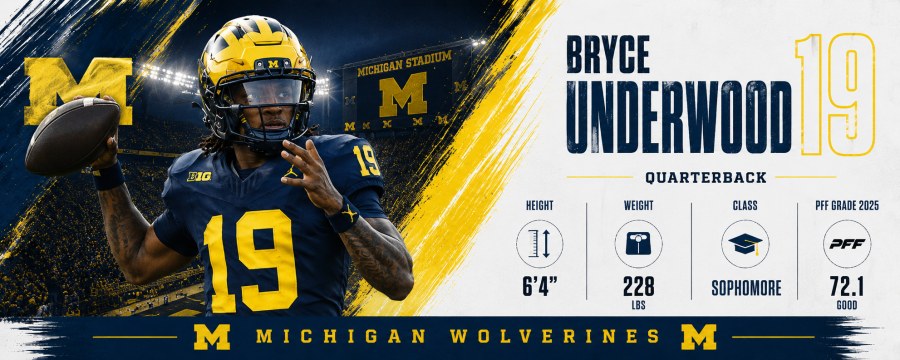
Bryce Underwood had a rollercoaster freshman season. The flashes were spectacular. The consistency was not.
His rookie season showed why he arrived in Ann Arbor as the No. 1 recruit in the country, but also why quarterback development rarely happens in a straight line.
Underwood threw for 2,428 yards and 11 touchdowns while adding six scores on the ground in 2025, becoming just the fourth true freshman quarterback to start for Michigan. At times, he looked untouchable. At others, the footwork, decision-making, and post-snap processing betrayed his age.
But the 2026 season should be the fascinating part.
Under Whittingham and offensive coordinator Jason Beck, Michigan’s offense should become far more intentional with Underwood’s athleticism rather than simply reactive. Designed quarterback runs, movement throws, and heavier schematic stress could unlock another layer of his game entirely.
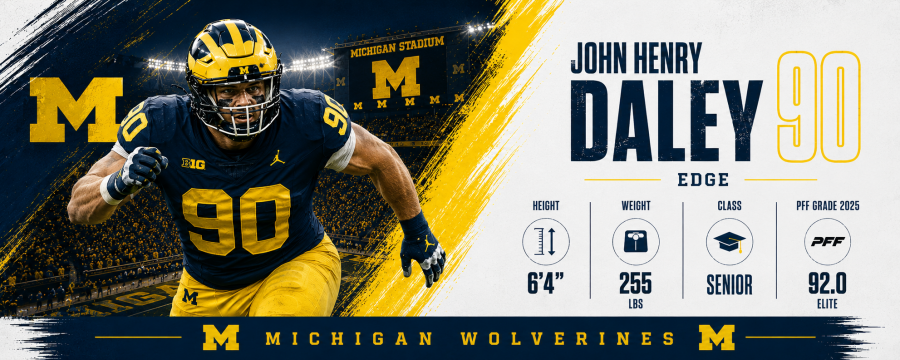
Michigan lost leading pass rushers Derrick Moore and Jaishawn Barham to the NFL, but Whittingham has brought one of his own with him from Utah.
Daley arrives in Ann Arbor after a disruptive defensive season, producing 17.5 tackles for loss and 11.5 sacks before an Achilles injury cut short what looked like a legitimate national award-caliber campaign.
And the familiarity with the system and his outstanding stats make him extremely valuable.
Daley gives Michigan an immediate tone-setter inside a front seven undergoing transition. Assuming he returns fully healthy as expected this summer, the Wolverines may again have the kind of edge presence offenses must account for every snap.
And with games against Oregon, Penn State, and Ohio State looming later in the year, Michigan desperately needs a pass rusher capable of changing possessions on his own.
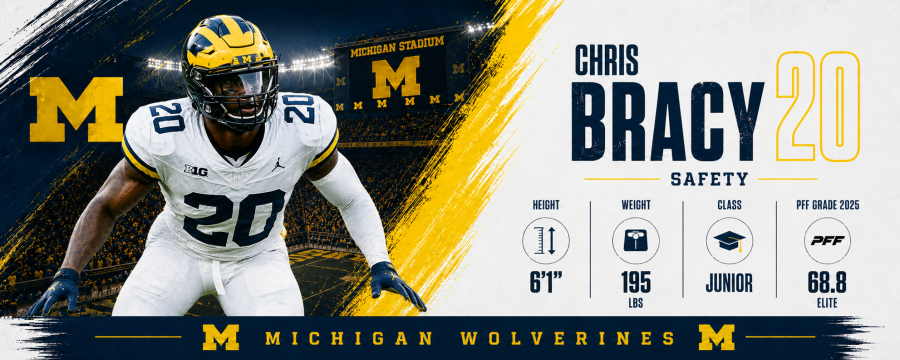
Michigan’s defensive back room is loaded on paper. Yet, Chris Bracy still feels underrated.
The former Memphis Tigers defensive back arrives after a breakout 2025 season in which he posted 81 tackles, 9.5 tackles for loss, double-digit pass breakups, and constant activity around the football.
But what stands out most is the versatility. Bracy plays with the kind of downhill aggression that modern defenses crave from hybrid safeties, but he is equally comfortable triggering into underneath zones or fitting the run from depth.
For a Michigan defense that occasionally looked young and exposed in the secondary last season, adding an experienced playmaker matters enormously.
Rod Moore’s return may headline the room. But Bracy could quietly become one of the most important additions on the entire roster.
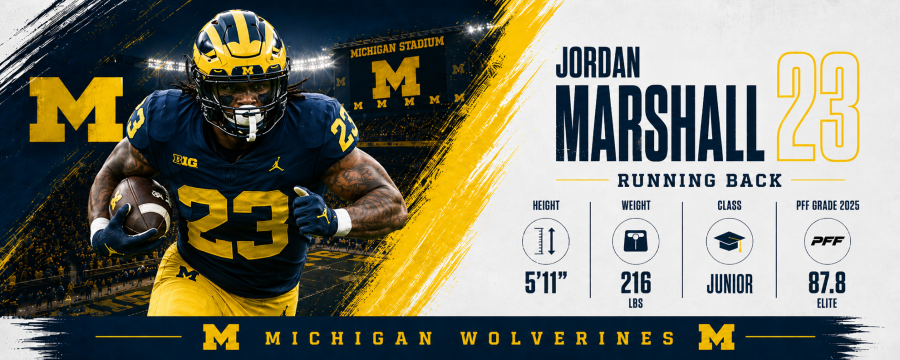
Michigan football should always look dangerous when running the ball. And Jordan Marshall gives the Wolverines a chance to fully return to that identity.
After beginning 2025 buried behind Alabama transfer Justice Haynes in the rotation, Marshall stayed patient, waited for his opportunity, and exploded once injuries elevated him into a starting role.
Across a four-game stretch in the middle of the season, he carried the offense, turning 84 carries into 570 rushing yards and seven touchdowns while consistently punishing defenses between the tackles.
In an offense expected to lean heavily into pounding the rock again under Beck, the Wolverines’ run game is expected to thrive, especially with five-star freshman Savion Hiter adding even more explosiveness to the room.
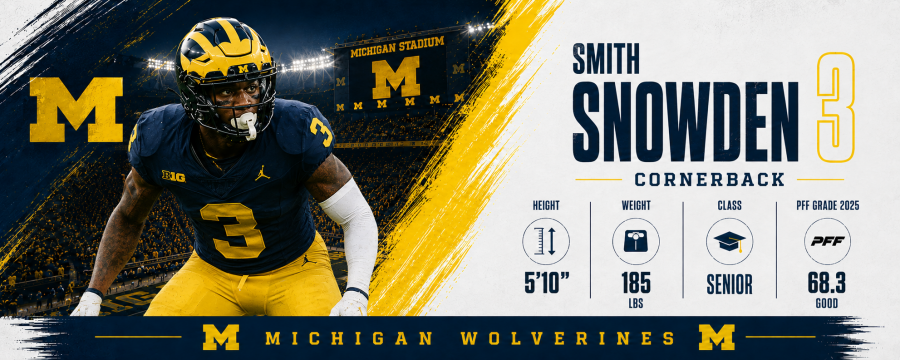
Few transfers fit this coaching transition more naturally than Smith Snowden.
The former Utah Utes defensive back followed Whittingham to Ann Arbor after developing into one of the most versatile defenders in the Big 12, contributing at cornerback, nickel, wide receiver, running back, and kick returner during his final season in Salt Lake City.
Michigan likely only needs one role from him. But it is an important one.
Snowden is expected to operate primarily at nickel, where his elite athleticism, recovery speed, and experience inside Whittingham’s system should immediately stabilize a secondary that occasionally struggled with youth and inconsistency in 2025.
And alongside returning standouts like Zeke Berry and Jyaire Hill, Snowden gives Michigan the chance to field one of the deepest defensive back groups in the conference.
This will be vital as the Wolverines face elite passing attacks this fall.

OWAIN JONES
COLLEGE FOOTBALL & NFL DRAFT ANALYST
OWAIN jones COVERS EVERYTHING college football & NFL DRAFT. COMING WITH PLENTY OF EXPERIENCE, OWAIN was PREVIOUSLY a writer for pfsn and WAS THE NFL DRAFT EDITOR AT NINETY-NINE YARDS WHERE HE CREATED DRAFT TALK. YOU CAN FOLLOW HIM ON TWITTER @OwainJonesCFB